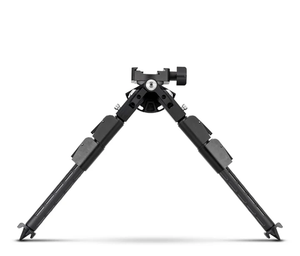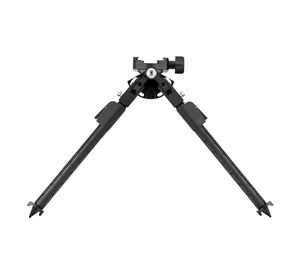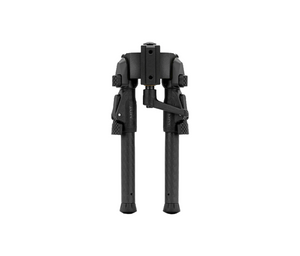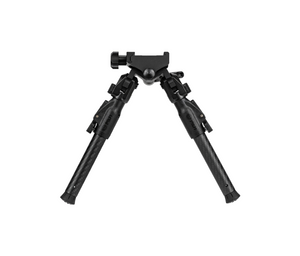
Bipods are a must-have for extreme long-range shooting. They offer stability, adjustability, portability, recoil management, and most importantly, shot consistency when you are shooting a mile and beyond. When shooting prone, they are quick to set up and are ideal for fast-paced precision shooting matches. You want durability with adjustable legs and secure mounting, like an ARCA or Picatinny rail. Below are our recommendations for Bipods to help you reach a mile and beyond while shooting from the prone position.
Extreme long-range shooting requires stability to help keep you on target when shooting at distance. A bipod gives you stability and helps reduce wobble with a two-point contact system. With the low center of gravity, it helps to absorb recoil from larger calibers like a .338 Lapua Magnum or .50 caliber, ensuring you stay on target for shooting 2,000+ yards. A bipod will also help when shooting from a prone position, on flat or uneven terrain.
What makes a bipod practical for ELR field conditions?
ELR conditions can vary between desert flats, grassy fields, rocky slopes, and everything in between. You need gear that can handle the varied conditions and perform under pressure. A bipod offers a simple and rugged platform constructed from materials like carbon fiber or aluminum that can withstand the cold, dust, and mud. You can rapidly reposition for your next shot because they are foldable, compact, and attached to your rifle. This also allows them to fit into tighter shooting positions, providing additional flexibility when needed.
How does a bipod complement other ELR gear?
Bipods support your rifle and leverage your optics magnification, allowing you to get on target, and stay on target. When using a bipod, you have a stable platform, and if you add in a rear shooting bag with a bag rider or a monopod it will further balance the rifle. The overall stability of a bipod, shooting bag, bag rider or monopod, will allow you the freedom you need to check your ballistic calculators.
What should I prioritize in an ELR bipod?
Just like a Tripod, you’re looking for adjustability and lightweight. For adjustability, you should look for legs that extended 6-12 inches allowing you to reach the proper angles needed for ELR shots. With additional features like cant and pan, you can make precise adjustments as needed. The feet on a bipod can vary as well, from spiked to rubber, which allows them to grip difficult terrain and increase the stability of the rifle.
How does a bipod support ELR training?
Bipods allow for consistent rifle positioning, allowing you to read ballistics and wind. With their stable rifle platform, you will get repeatability which will allow you to take successful training shots while firing from a prone position, on a table, or on an obstacle.